Somerset’s first Former Women’s  Cricketers’ Lunch held at Taunton

Article contributed by Richard Walsh

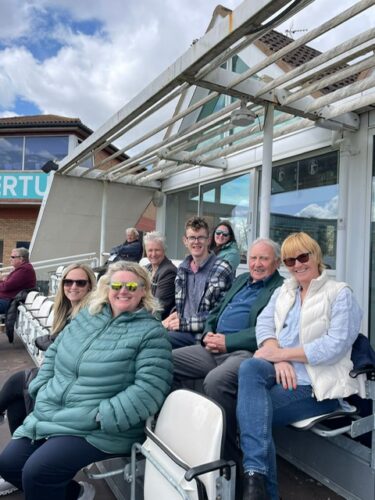
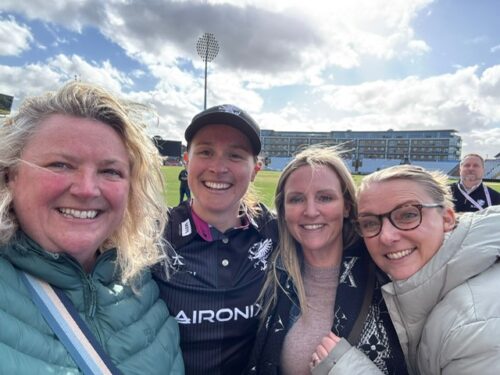
PAST and present came together for a special occasion when Somerset Women played their opening match of the season against Yorkshire in the Metro Bank One Day Cup at the Cooper Associates County Ground.

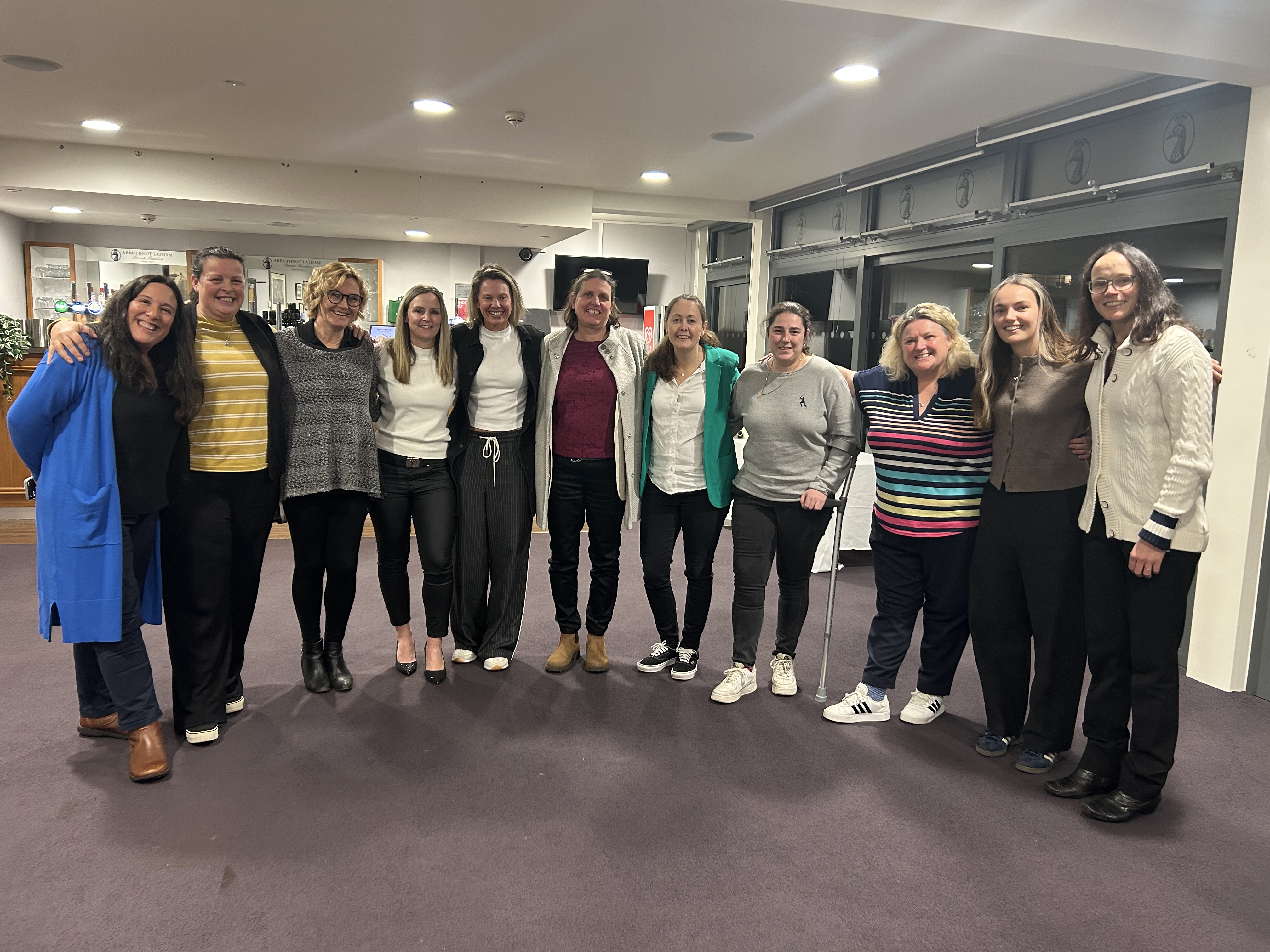
The first Somerset Former Women’s  Cricketers’ Lunch took place in the Long Room and provided a fitting backdrop to the day’s action as some familiar faces from across the years gathered.

Lucy Turner, who played for Somerset in the early 2000s, said: “The day was spent catching up with each other, sharing memories, stories, and plenty of laughter, while reflecting on how far the women’s game has progressed.

“The occasion carried added significance given the modern structure of the women’s domestic game, with the Women’s Metro Bank One Day Cup competition representing the top tier of 50-over cricket in England. Yorkshire’s presence also marked their step up into Tier 1 cricket this season, underlining the continued growth of the competition.

“Most of us watching had played in the old County Championship which took place over a week in Cambridge every summer!

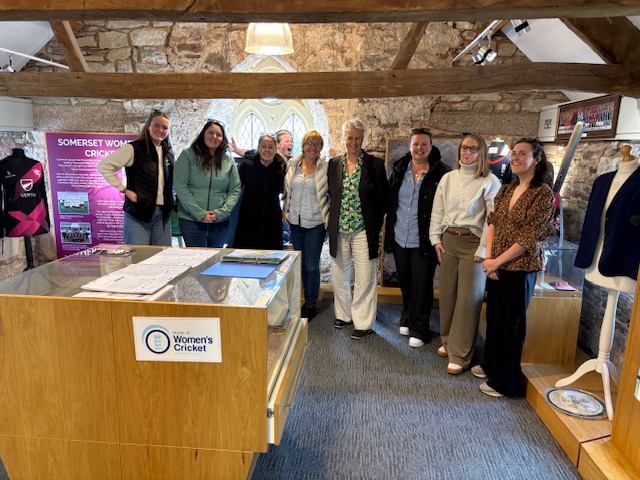
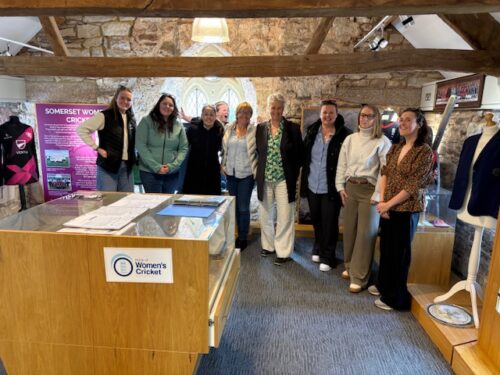
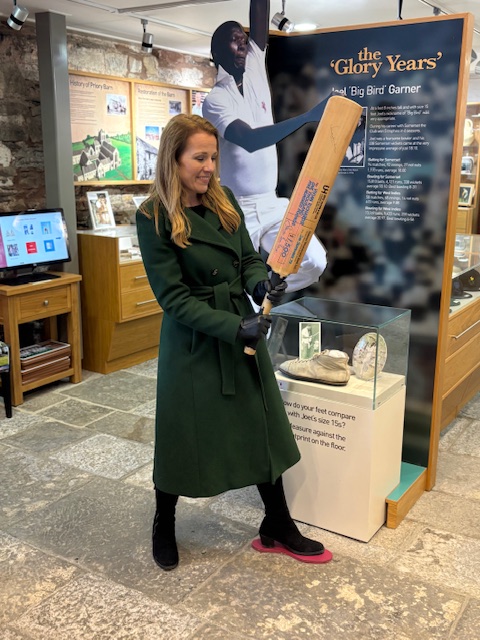
The past players were also treated to a tour of the Somerset Cricket Museum’s new impressive exhibition of women’s cricket over the years.

Pictured, left to right, Jodie Filer, Georgina Adcock, Kiri Purssey, Lucy Turner, Judy Wilmot, Helen Davies, Lisa Crampton and Hannah Thompson-Radford. (Contributed)

Out in the middle, the current Somerset side produced a performance worthy of the occasion and in a tense, low-scoring contest, they edged past Yorkshire, chasing down 179 with just one wicket left. 

Lucy added: “Days like this underline what makes county cricket special. It is not just about results, but about community, heritage, and continuity. At Taunton, over lunch and on the field, Somerset women’s cricket honoured it’s past while celebrating a thrilling present.

Thanks go to David Gurr for organising the occasion, Mike Unwin for the museum tour and to Chief£ Executive Jamie Cox for the invite to the Long Room.”

As a postscript to the above, Lisa Crampton (nee Padgett) posted on LinkedIn:-

 “ In my playing days there was very little knowledge, awareness and support of Somerset County Women (this was the norm in most counties) so it is a much appreciated gesture that the foundations of the women’s game are being recognised and interwoven with the game we see today. The worlds looked very different, but there is a thread that joins us all. 

There is now a really impressive women’s cricket section in the Somerset Cricket Museum which charts the history of the women’s game (my playing days), the international game (my brilliant teammates achievements) and the journey to professionalism (my Western Storm chapter). Thank you to Mike Unwin and all who have diligently spent time capturing the history. 

The support that wasn’t there in my time was a big driver in my professional ventures to change the cricket landscape for females for the better. It is lovely to stay connected to the Somerset journey in its ‘Tier 1’ chapter. Things have come a really long way. 

I feel grateful for the memories and the people I shared the journey with – both on and off the field.”


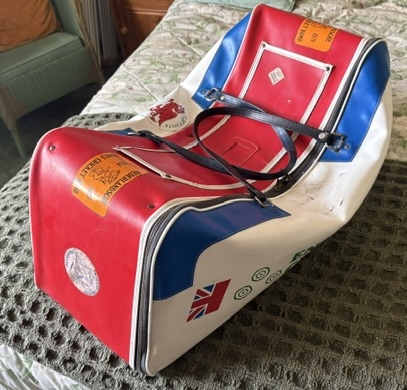
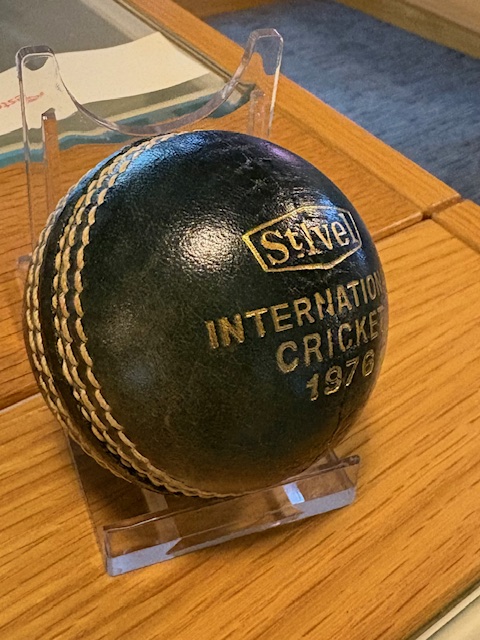
Notes on the Blue Cricket Ball.

Victorian men did not formally “ban” the red cricket ball for women, but rather experimented with a blue ball in 1897 to prevent female players from allegedly fainting at the sight of the red colour, which was seen as too reminiscent of blood. The blue ball was largely unsuccessful as it was hard to see against the green grass and sky. 

  • The primary motivation, according to historical accounts, was a condescending belief, by Victorian men, that women would be frightened or faint upon seeing the traditional red ball.
  • A blue ball was produced by Alfred Reader for Gamages Ltd. in 1897 specifically for women to use, which was considered a “curious experiment”. However the blue ball did not perform well in terms of visibility, making it difficult to use in actual games.

The history of the blue “St Ivel” cricket ball that is in the Women’s Cricket display, as described in Wisden 1977 is as follows:-

“Preparations for the fiftieth birthday of the Women’s Cricket Association were started over two years ago and were stepped up when it became known that the Australians had accepted the invitation to tour England for a Test series as part of the celebrations… 

The most memorable event in a Golden Jubilee season packed with cricket, as well as social functions, was the falling, to women cricketers, of the last stronghold of cricket, Lord’s, and with the blessing of the MCC.

England played Australia on Wednesday, August 4 in a 60-over match and history was made. A centrally pitched wicket was provided and countless press, broadcasting and television personnel took an active interest

England celebrated the day fittingly with an eight wicket victory but  forfeited the St. Ivel Jug, Australia having achieved the faster scoring rate in the combined Canterbury and Lord’s limited-over matches. 

The scene in the Long Room afterwards was one to be remembered. Many spectators, most of them women, stood there to watch the President of the MCC, present the trophy to Australia and players of both teams received from the sponsors a specially manufactured blue cricket ball in commemoration of the historic occasion.”

Women’s Cricket Data Base

The database has been compiled by Matt Kingdom, primarily using womenscrickethistory.org and CricketArchive, amalgamating the sources into searchable spreadsheets, with basic statistics/sorting by team also available.

A Brief History of Women’s Cricket in England

An article contributed by Mr David Lausen.

The history of women’s cricket goes back at least three hundred years and it is certainly not a story of steady progression. There were times when there were many barriers to women and girls playing, claims that women playing cricket was either unnatural or unhealthy, and open resentment that women were transgressing into the male ‘domain’. The following is my take on the changes over three hundred years. One of my grandmothers played the game in 1890s and one of my daughters played from 2000 to 2013.

Continue reading “A Brief History of Women’s Cricket in England”

West Women’s Cricket

An article contributed by Matthew Kingdom.

Early Years (1930-1946)

In the early 20th century, domestic women’s cricket in England was organised regionally. In the 1930s, five “Territories” were defined by the Women’s Cricket Association (WCA): North, Midlands, South, East and West. West Women (sometimes referred to as West of England or Western Counties Women), played their first recorded match on 23rdJune 1930, against Midlands Women at Bournville Cricket Ground in Birmingham – the match was drawn after “deluges of rain delayed the start”. 

Continue reading “West Women’s Cricket”

The Past and Future of Women’s Cricket in Somerset

Reflections from interviews with Kieran Peters and Jan Godman – article contributed by Matt Kingdom

In September 2023, I sat down with Kieran Peters and Jan Godman to discuss the history and state of the Somerset Women’s cricket team, and the wider themes of their careers and cricket in the South West.

Continue reading “The Past and Future of Women’s Cricket in Somerset”

Taunton – The Home of Women’s Cricket

Article contributed by Matthew Kingdom

On 29th August 2006, on Day 1 of the England v India Women’s Test match at the County Ground, Taunton, it was announced that Taunton would become the new “Home of England Women’s Cricket”, with the aim of hosting at least one women’s international match at the ground each year, as well as key domestic matches and training camps.

Continue reading “Taunton – The Home of Women’s Cricket”

Somerset Women

Article contributed by Matthew Kingdom

Women’s cricket in England developed throughout the 20thcentury under the auspices of the Women’s Cricket Association (WCA). In the 1930s, the first “County Associations” were formed, each affiliating to one of five Territorial Associations: North, Midlands, South, East and West.

Continue reading “Somerset Women”

Western Storm

Article contributed by Matthew Kingdom


The Kia Super League era (2016-2019)

In 2016, the Kia Super League (KSL) was created, a semi-professional T20 league consisting of six teams, reflecting the increasing popularity of women’s cricket and aiming to drive up standards in the women’s game. Somerset CCC partnered with Gloucestershire CCC and the University of Exeter to form Western Storm, representing the South West of England and led by England captain Heather Knight. Sophie Luff, Anya Shrubsole and overseas player Lizelle Lee were the three [Somerset] representatives in the squad alongside former players Izzy Westbury and Fran Wilson.

Continue reading “Western Storm”

Somerset Wanderers Ladies Cricket Club – Club History

Article contributed by Nicky Tranter.

I started teaching Physical Education in Bath September 1966, and offered cricket as an optional extra sport.

Somerset had a Ladies County Team at that time, and I went to the County Trials in 1967 taking 3 girls from the school with me. However there were very few matches and the last straw was one weekend when I travelled to Weston-super-Mare from Bath – by public transport – only to find the ground deserted: no-one told me the match had been cancelled! The County Team folded in 1968 and I decided that if I wanted to play the only way forward was to form my own team.

Continue reading “Somerset Wanderers Ladies Cricket Club – Club History”